"The SKAI TV organization 'All Together for the Environment' coupled by the Association for the Protection and Rehabilitation of the burned area at Pendeli as well as the Municipality of Kifissia, organise reforestation at Pendeli, Kokkinara, along with students of private and public schools.
Everybody willing to participate is welcome! We will plant 8,000 trees. The foresters of the Penteli Forestry office offer their expertise in proper tree planting to volunteers wishing to learn."
As soon as we noticed the above announcement we decided to join and help in the best possible way.
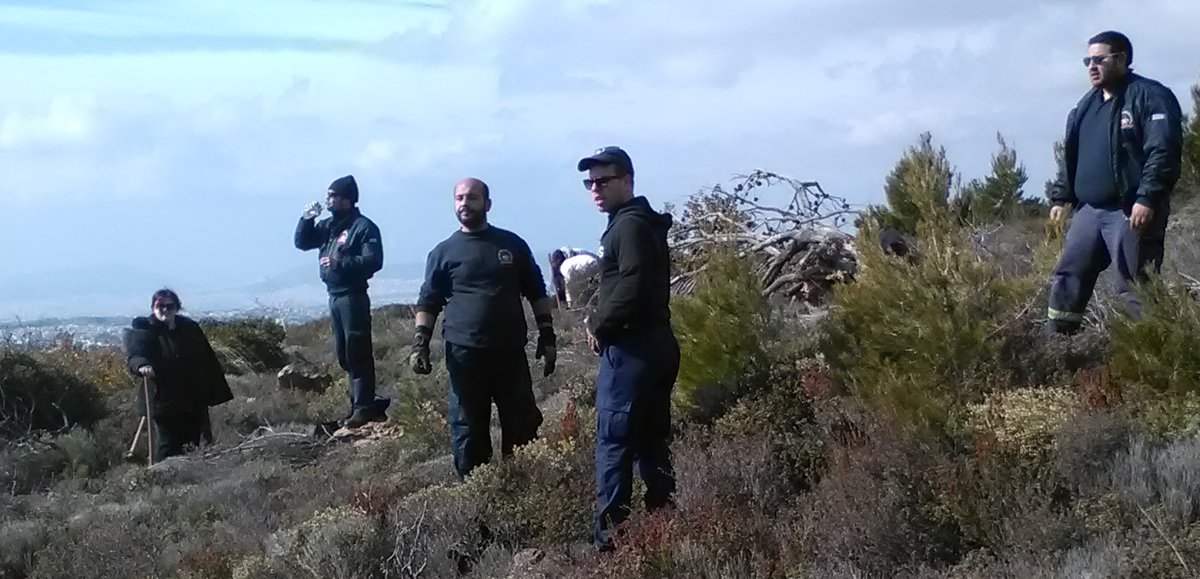
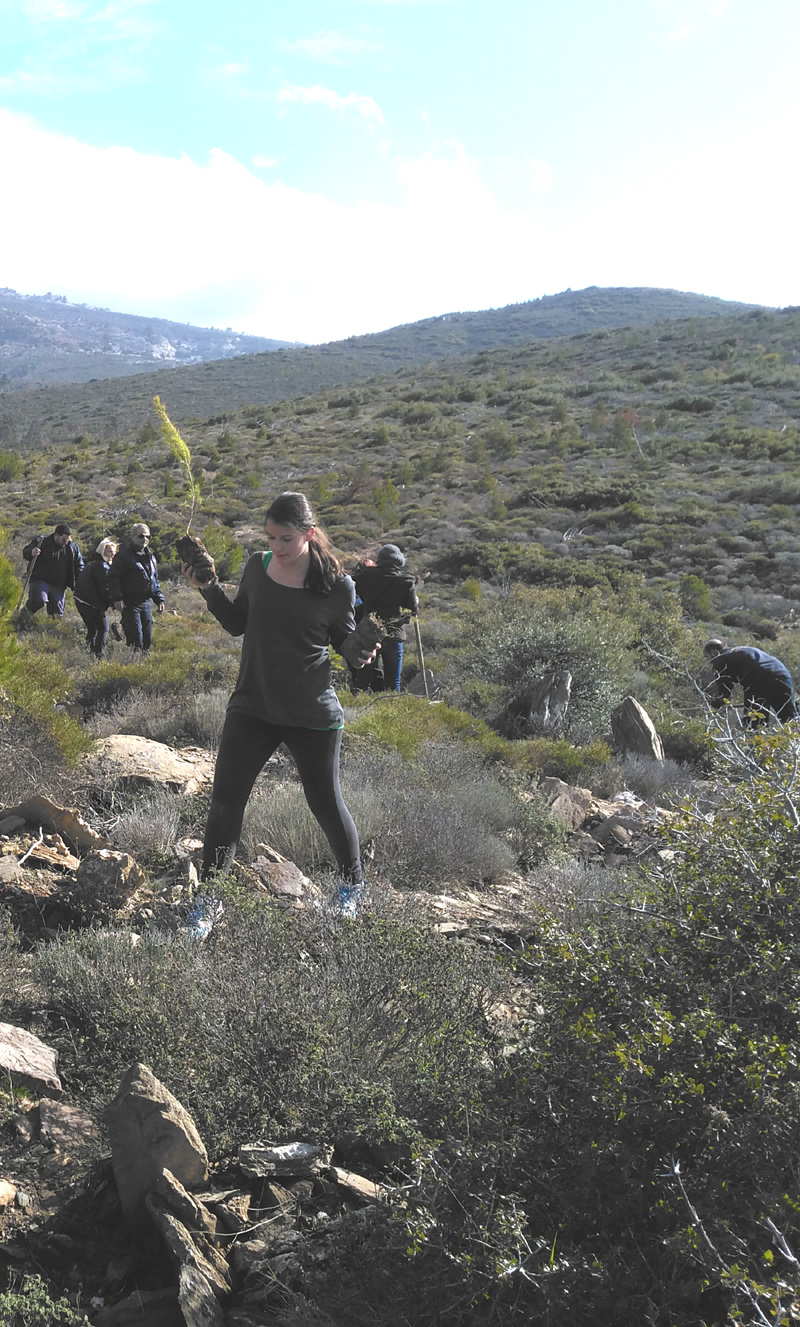
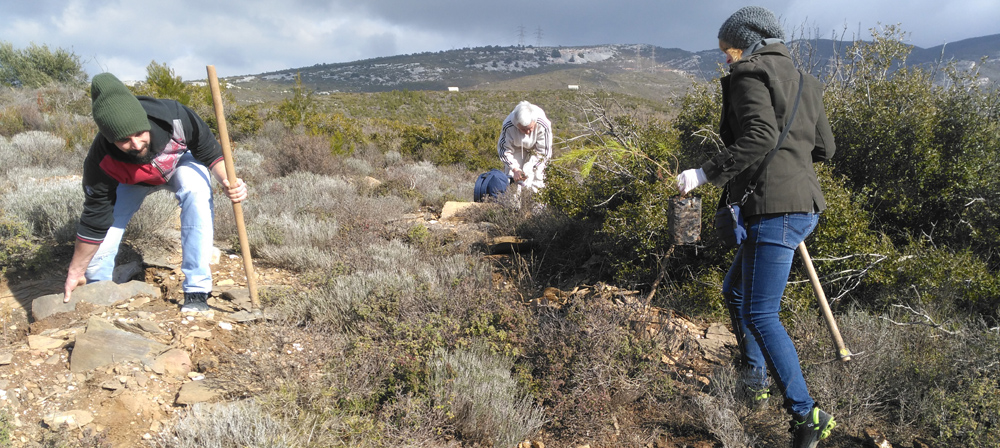
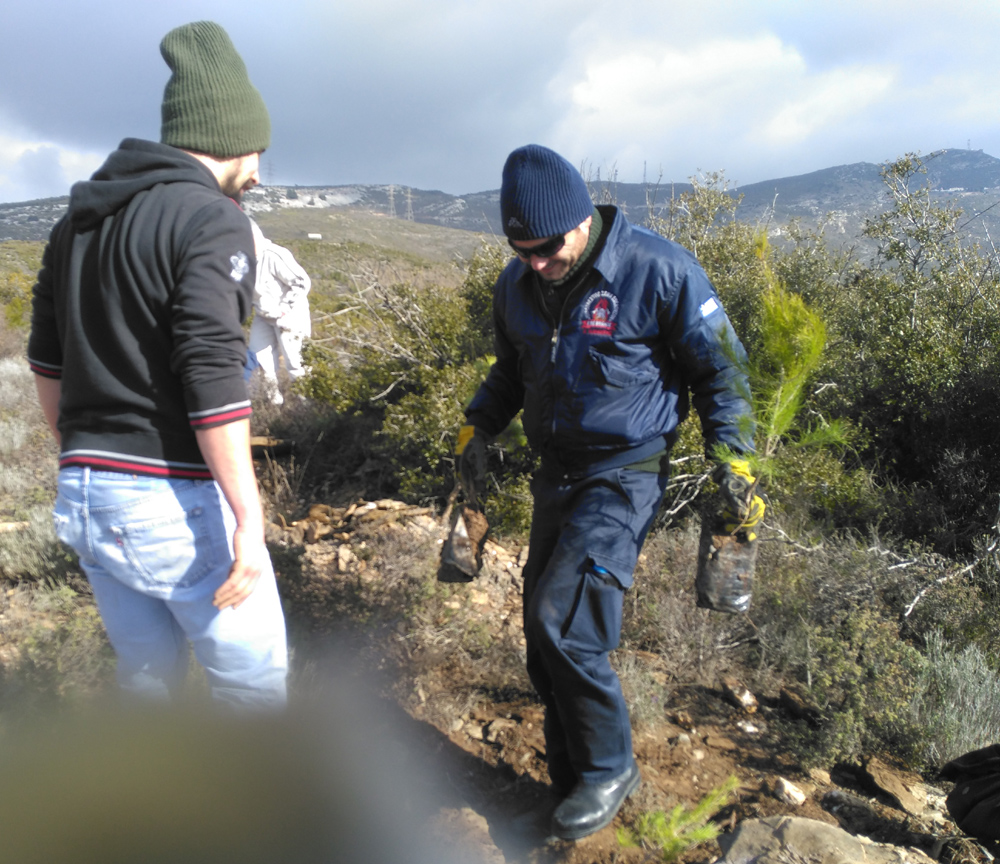
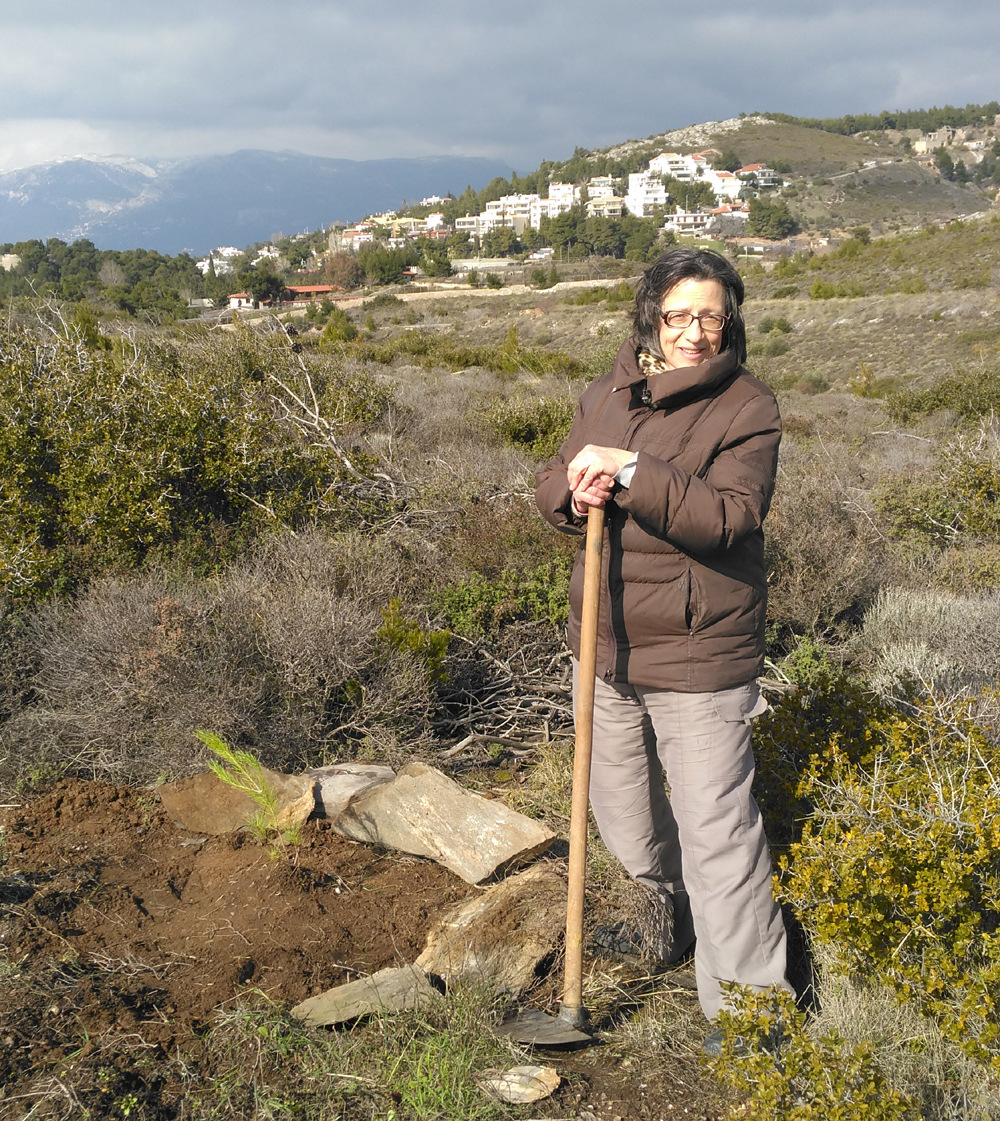
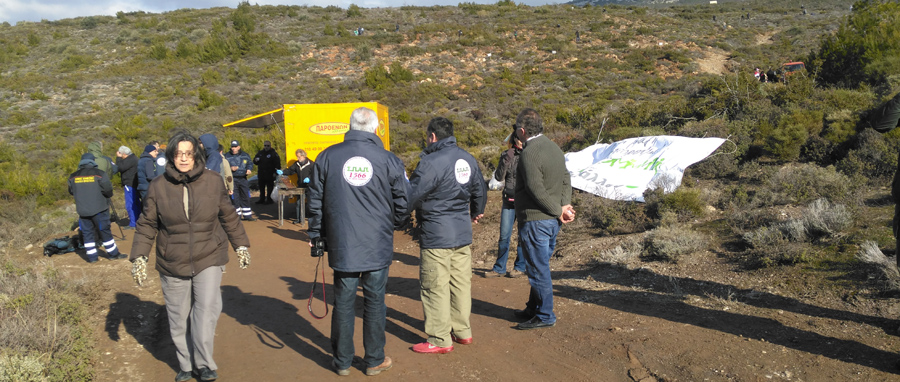 We drove to the end of Xenias street, then we took the path leading to the specific location. The SKAI people were already there, as well as the foresters and the SPAP (Association for the Protection and Rehabilitation of the burned area at Pendeli). We were welcomed with snacks and drinks and were offered the nessary planting tools, mainly the shovel that you can see below and as many baby trees as we wanted.
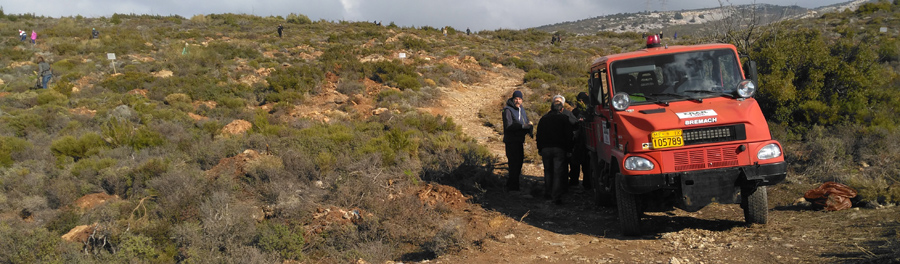
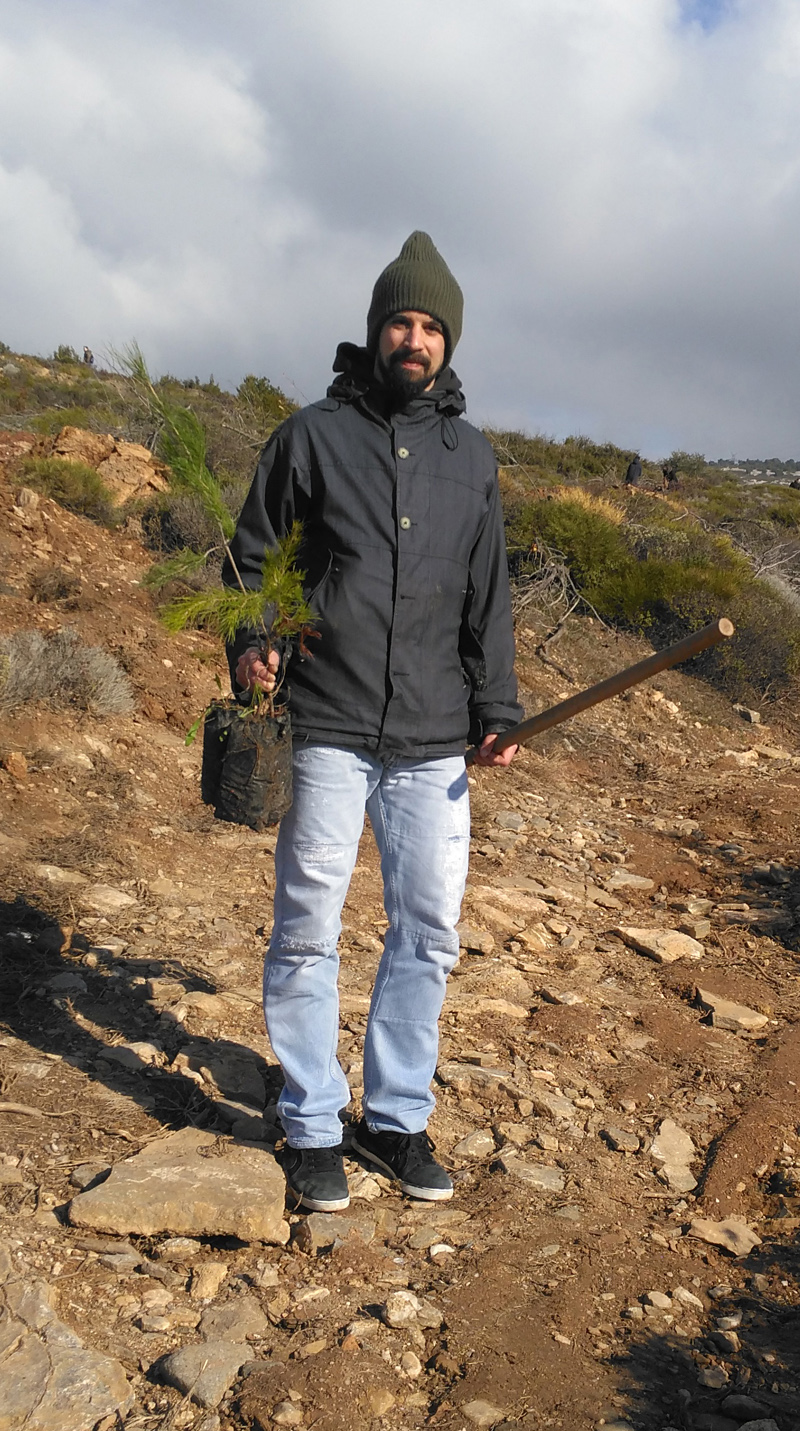
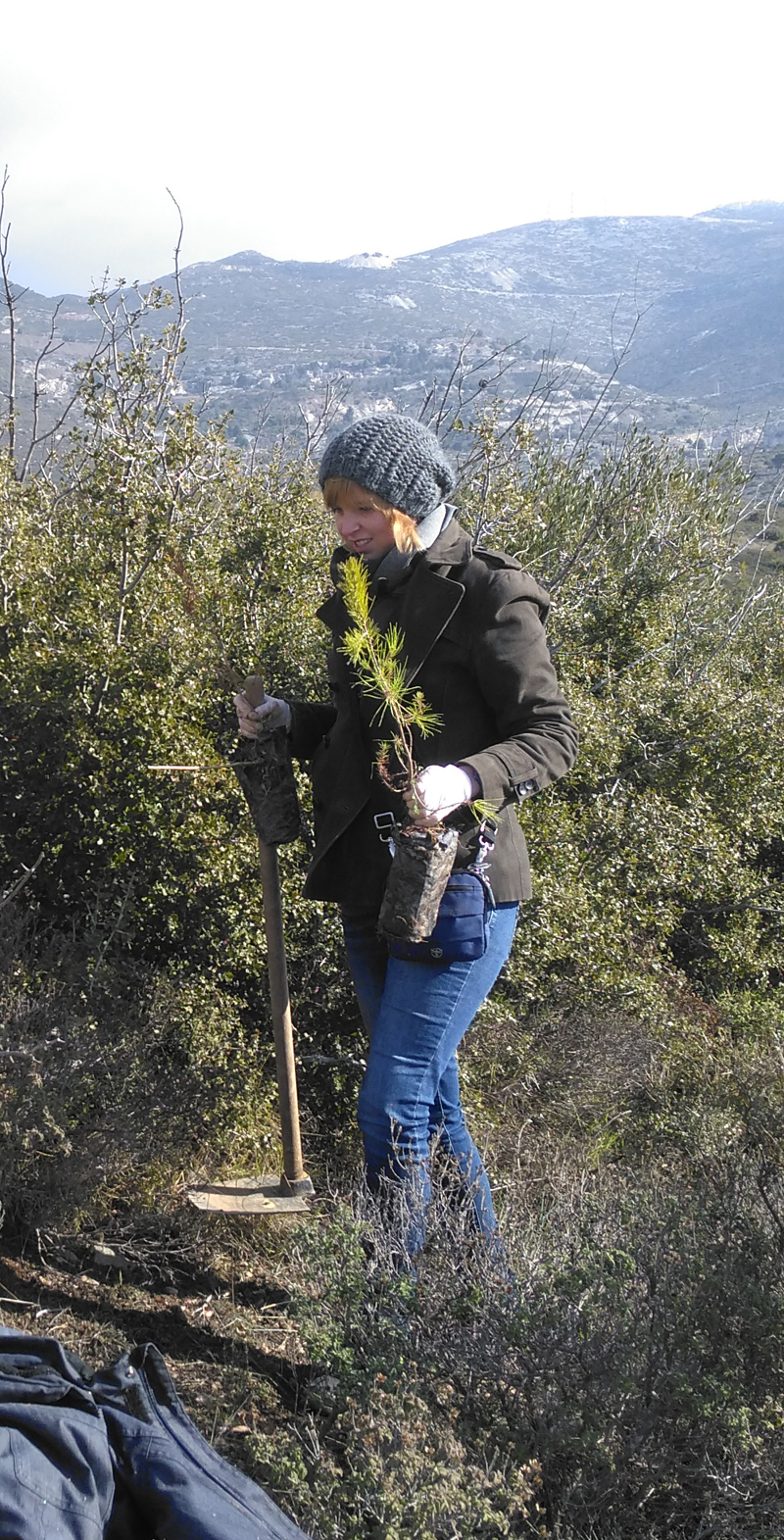
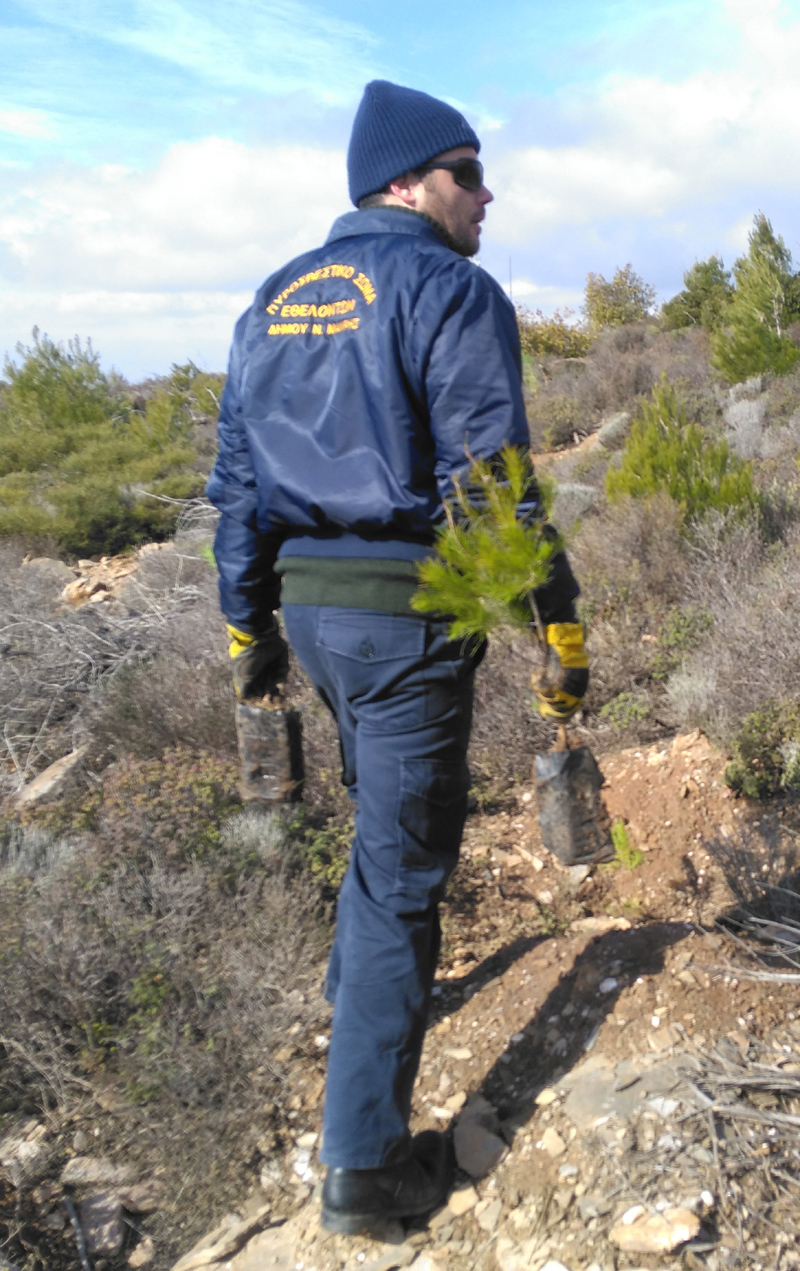
We had already received instructions on how to create correct planting pits, therefore we immediately started the procedure:
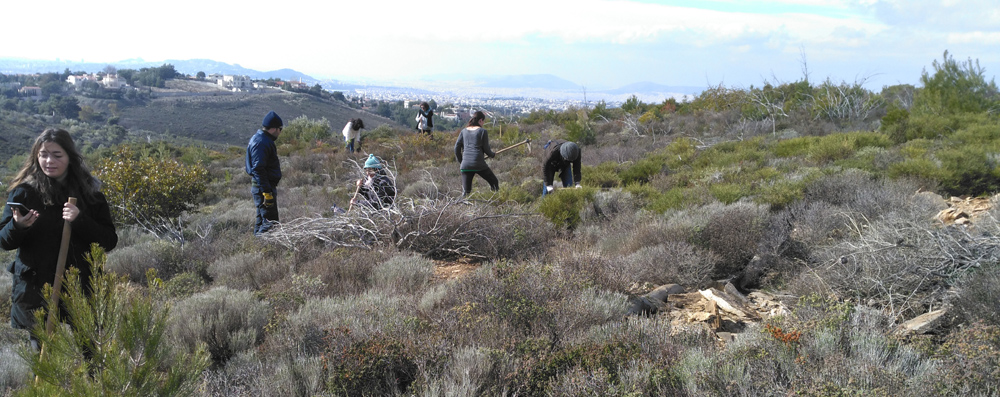
 1) Planting pit opening
The pit should preferably be shaped as a truncated cone with the narrow surface to the depth of the pit and the wide surface at ground level. For three-year old Kefalonian firs and black pine seedlings the pit should be 40-50 cm deep and 30-40 cm wide.
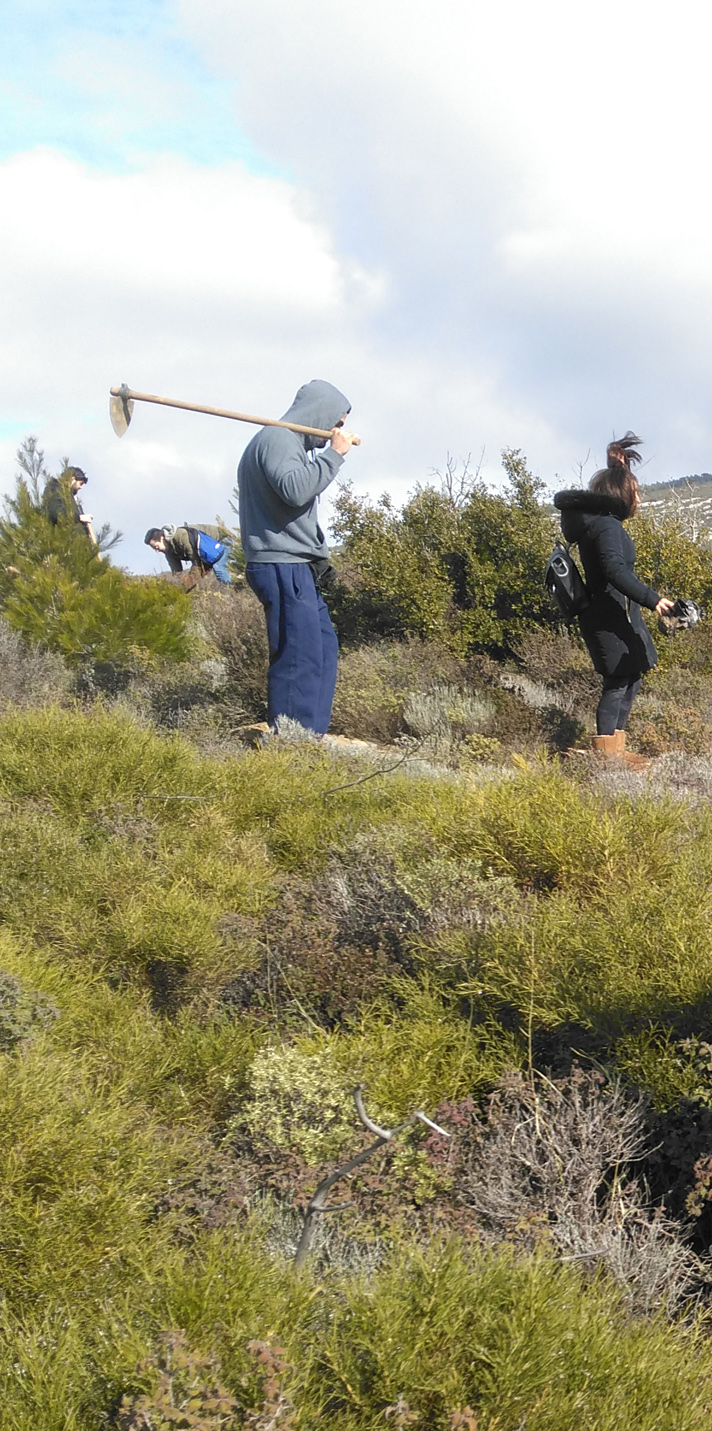
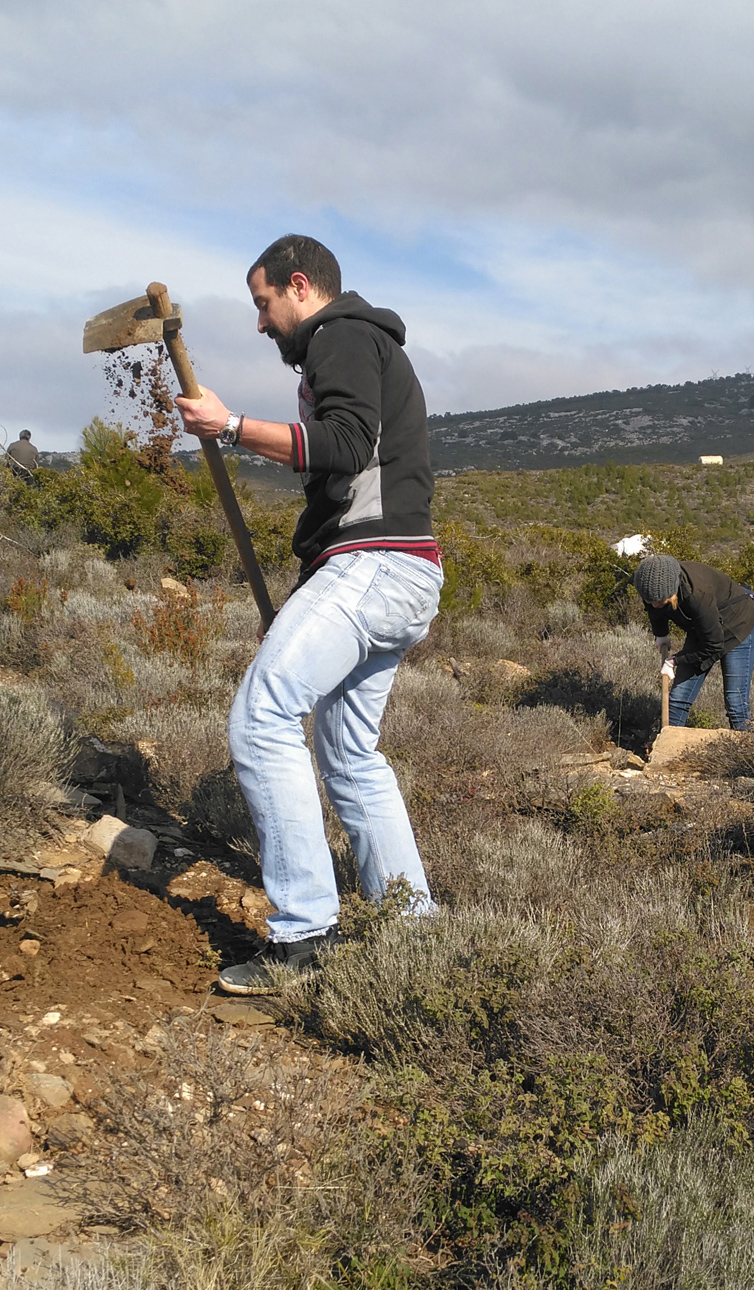
The soil that was removed to create the pit should not be thrown away but placed in two piles to the right and left of the pit for later use. We firstly pile up the surface soil (digged out up to 5-10 cm. deep) and the second pile should consist of the soil collected deeper. Stones found in the pit should be removed.
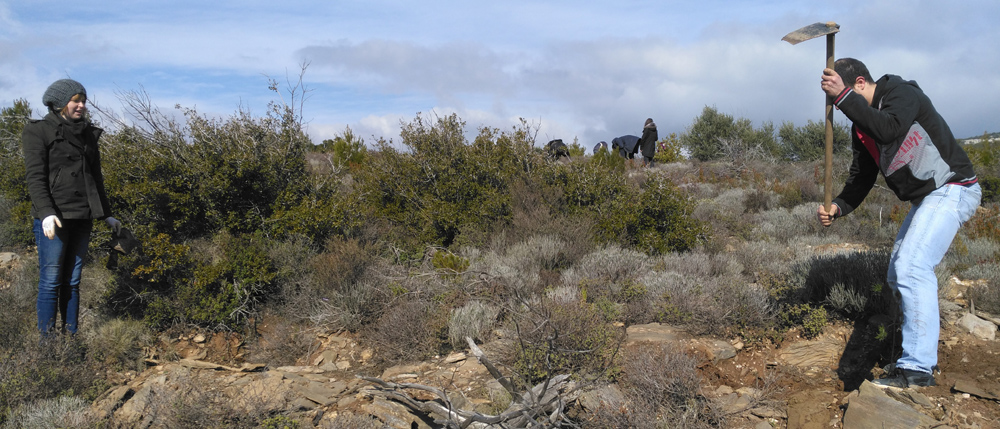
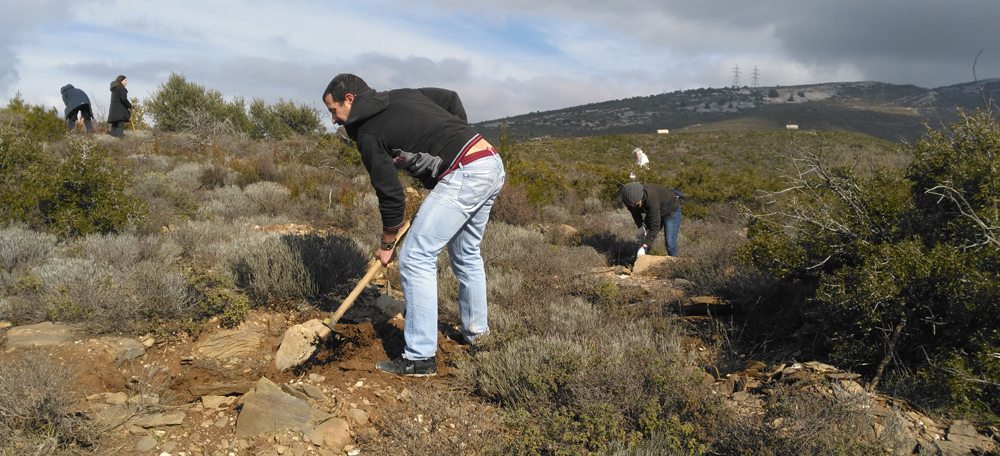
Without removing more soil we should next stir the bottom of the pit up slightly to prevent it from being compact and help root development this way.
2) Placing the planting material into the planting pit
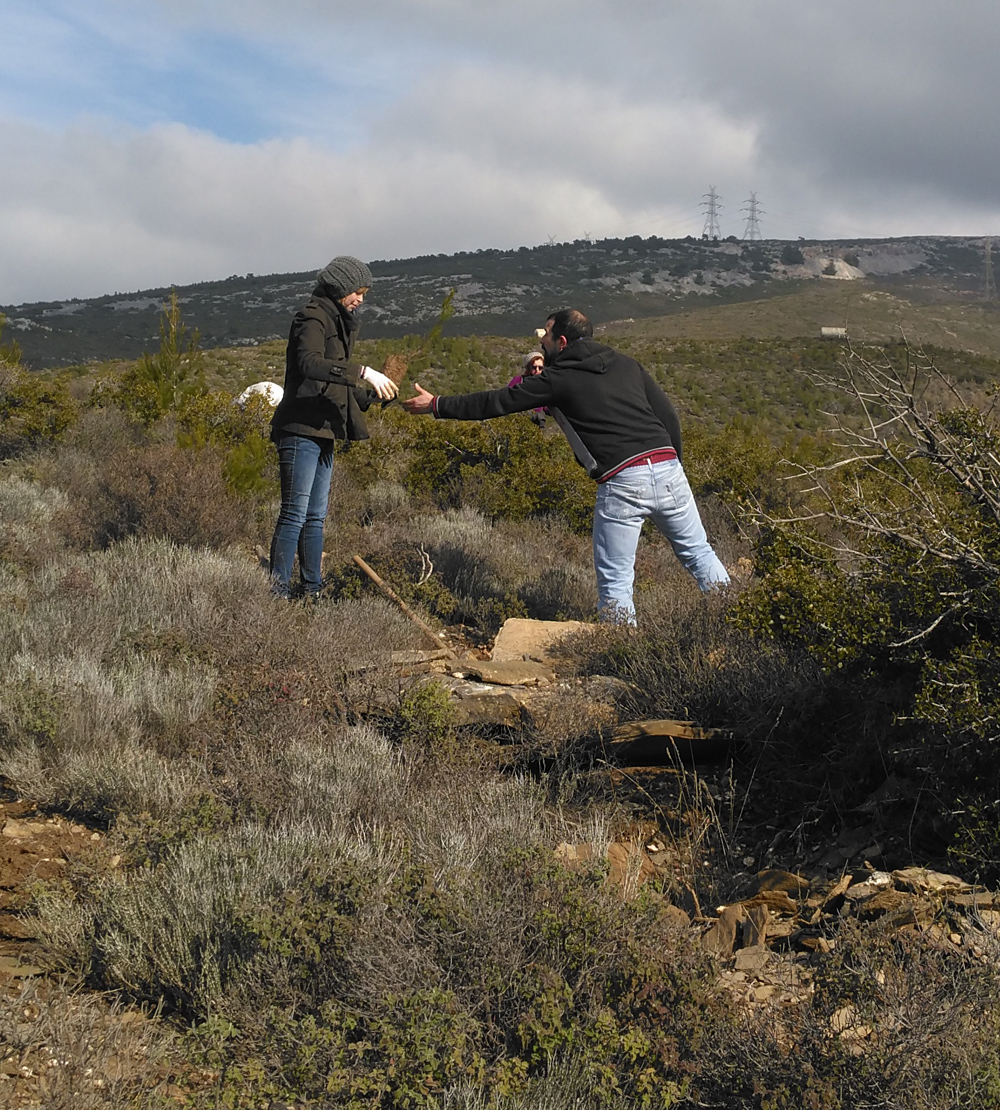
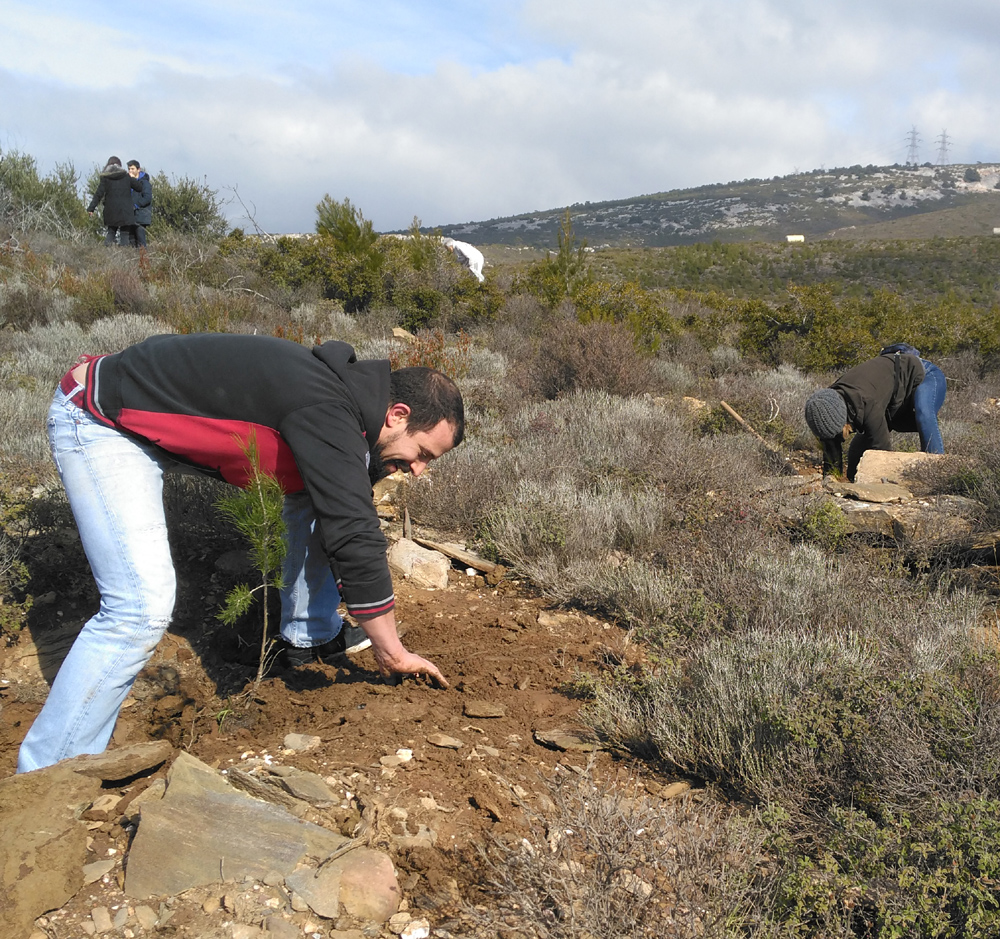
Hold the plant with one hand from the neck (between roots and foliage) and carefully remove the plastic bag. Place the seedling upright in the pit, so that the roots merely touch the bottom of the pit without getting crushed. With the other hand carefully arrange the roots in an orderly manner.
3) Filling the pit
Add the first pile of surface soil that was collected when digging the pit and press around the plant with the palms and fingers so that this soil covers the roots. Then add the remaining soil that was removed from the bottom of the pit so as to cover up to 2-3 cm above the neck of the plant and press pushing the soil around the plant gently.
4) Creating a retention basin
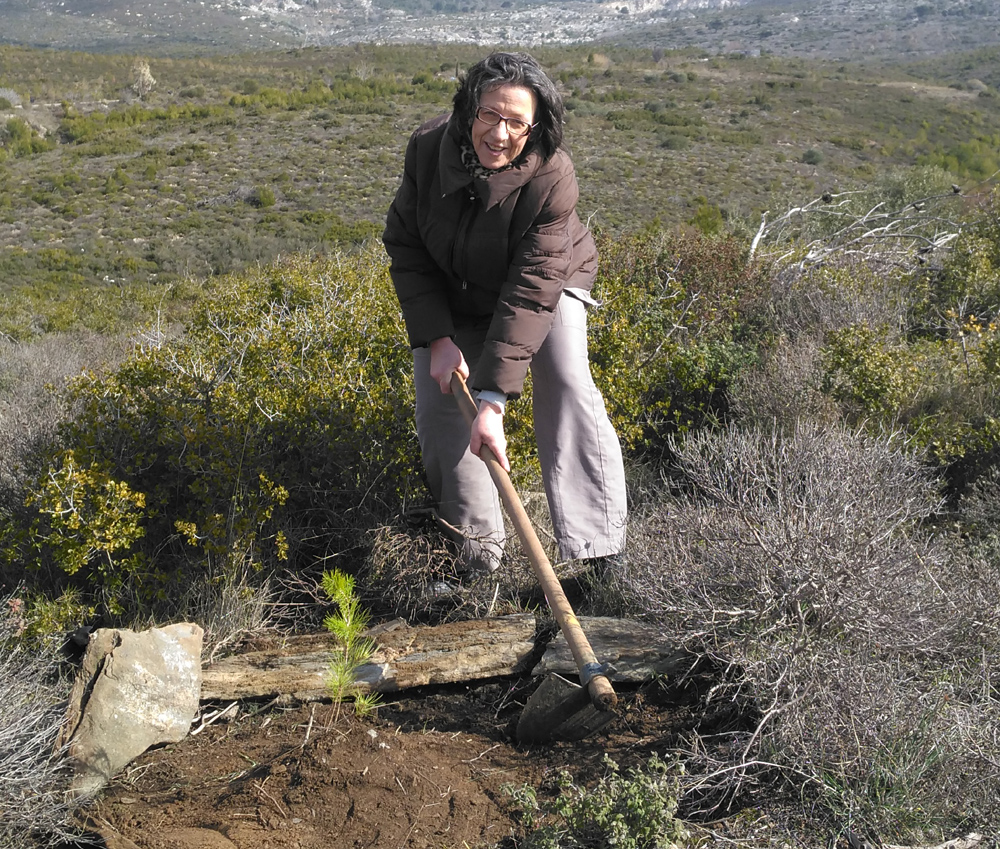
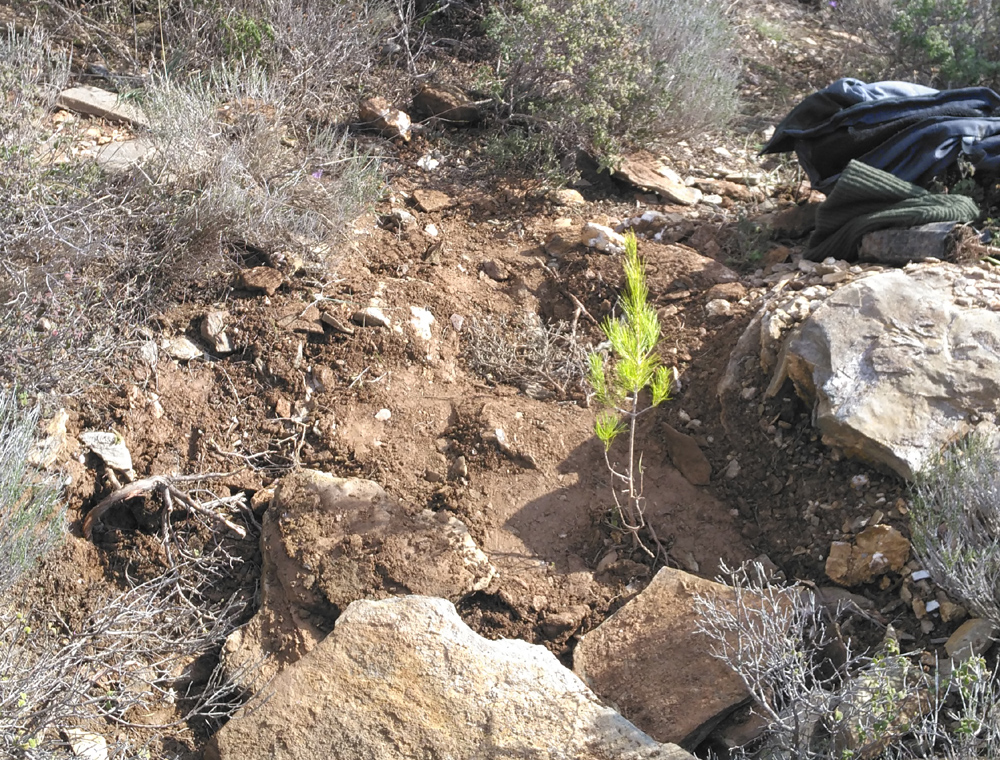
Lightly dig the soil around the plant in a 150 cm diameter and shape the pit, so that its surface is 5-10 cm. under the ground surface, in that way a small mound will be created which will be holding rainwater and irrigation.
Usually after winter this basin will have lost its original shape due to heavy rain. Hence the basin should be formed again in the near future.
5) Seedling care
This step is not taken immediately after planting, but at regular intervals. It includes weeding, hoeing and watering.
Reforestation with Spiro
Eleni with BreakFree
Growing tomatoes on your balcony
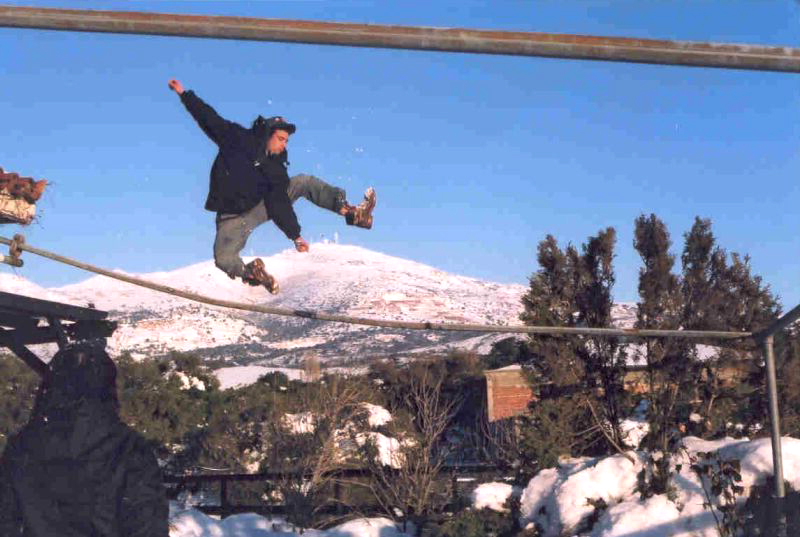 The Pendeli mountain is situated northeast of Athens and southwest of Marathon. It was renowned in Classical Greece as well as in the Roman Empire as a source of the excellent white marble, which was used to build the Parthenon and other ancient monuments. Today, the ancient quarries are mainly used to obtain material for the Acropolis restoration works.
The main pit used for the mables' storage at the foot of the Patima hill was transformed into the local theatre of Vrilissia named after the famous greek actress Aliki Vougiouklaki that was born at the neighbouring Municipality of Maroussi.
The fires
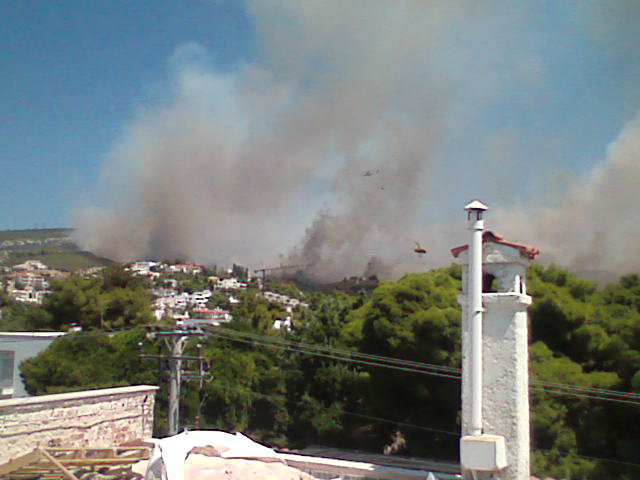 The destructive fires of 1995 as well as uncontrolled construction have caused enormous damage and a great number of local wild animals perished. Many groups are however now regularly organising reforestation actions and an increasing number of small trees is steadily growing to hopefully get the old natural environment restored.
The Duchess of Plaisance
During the Greek War of Independence, the French philhellene Sophie de Marbois-Lebrun, Duchess of Plaisance, supported the revolutionary leaders.
The Duchess settled in Greece in 1834 and she bought large plots of land in Athens and on the Pendeli mountain. She had the Rododafni Castle in Pendeli built for her, known as Pyrgos Doukissis Plakendias, the construction of which was started in 1840, but it was not finished until 1961, when Constantine II of Greece was planning to move into it (but never did).
It all started when the Duchess lost her beloved daughter and kept her embalmed at her home in Piraeus Street in Athens. But when a fire burned the body of her daughter, she became distant and cranky and bought land in the Pendelikon area promising utility projects for themonks of the area. She isolated herself in her Tower, covering it with a veil of mystery, with various legends surrounding her ever since:
Rumour has it that she was organising mysterious feasts with strange guests, that she maintained relations with outlaws and that she had embraced satanism after the devastating loss of her daughter.
Today, the Tower houses the Cultural Community Center of Pendeli and the Duchess became a ... metro station: the inhabitants of Halandri, the area neighbouring her Tower, who had a special fondness for her as she built the bridge in the stream area, named the local metro station after her name, "Doukissis Plakendias".
Here is the link to the map showing the Doukissis Plakendias Palace from the Doukissis Plakendias street
The Pendeli Observatory Station
Another interesting sight at the Pendeli mountain is the Pendeli Station of the National Observatory of Athens, completed in 1936.
Copyright GreeceForVacation.com


